What is NCP 109?
NCP 109 is the NSI Code of Practice for the design, installation, and maintenance of access control systems. It sets the standard for how access control should be specified and installed across UK buildings, and is recognised across the security industry as the benchmark for best practice.
Tremorfa is an NSI Gold approved company, which means all access control work we carry out is designed and installed in line with NCP 109.
What has changed?
The latest revision, NCP 109 Issue 4, introduces new requirements for doors that form part of a building's escape routes. It now incorporates three new standards for Britain and the EU - BS EN 179, BS EN 1125, and BS EN 13637 - which set out specific requirements for the hardware fitted to escape doors.
The key change is this: any door on an escape route must allow exit in a single action. A door that requires more than one action to open - for example, pressing a button and then operating a handle - does not comply.
Why does this affect maglocks?
A maglock is an electrically powered magnetic lock, typically mounted at the top of a door. It holds the door secure until power is released. In many buildings, a wall-mounted button is used to cut the power, allowing the handle to be operated and the door opened.
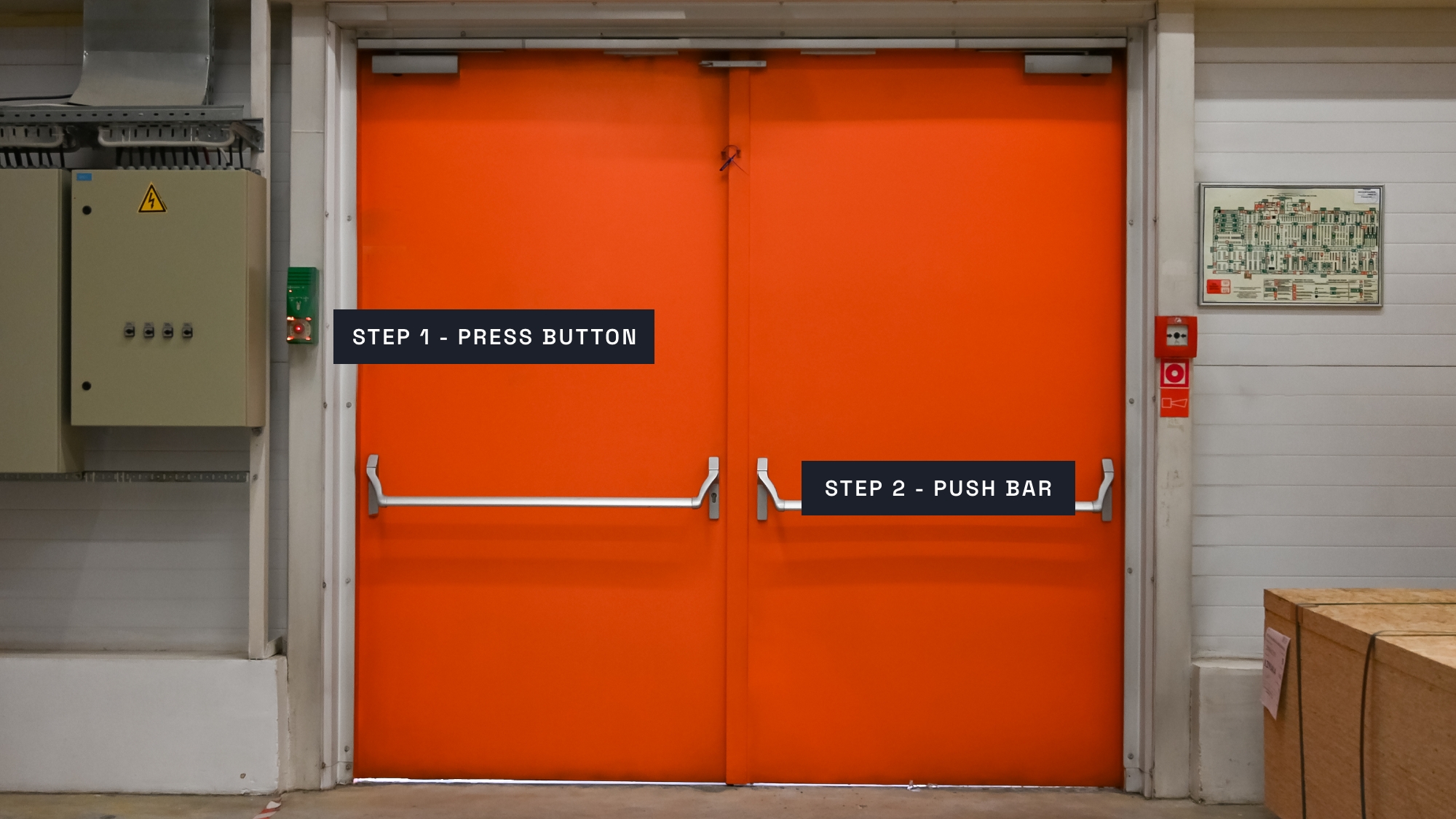
That process involves two actions - pressing the button, then operating the handle. Under NCP 109 Issue 4, this arrangement is no longer compliant on escape routes or fire escape routes.
It is worth noting that maglocks are not classified as a locking device. They are a restrictive device. A door secured only by a maglock is not considered locked for insurance purposes, and a building relying on maglocks on escape routes may face difficulties with compliance certification.
Example of a non-compliant escape door
A two-action process with both a button press and a push bar to exit.
What are the three door classifications?
Under NCP 109 Issue 4, every door in a building should be assessed and classified as one of the following:
| Door type | Classification | Hardware requirement |
|---|---|---|
| Non-fire door | Non-escape / non-panic door | No CE marked lock or furniture required |
| Non-fire door | Emergency escape door | CE marked lock and furniture to BS EN 179 required |
| Non-fire door | Panic escape door | CE marked lock and furniture to BS EN 1125 required |
| Fire door | Non-escape door | Fire rated lock required - consultation with door manufacturers likely |
| Fire door | Emergency escape door | Fire rated CE marked lock and furniture to BS EN 179 required - consultation with door manufacturers likely |
| Fire door | Panic escape door | Fire rated CE marked lock and furniture to BS EN 1125 required - consultation with door manufacturers likely |
Door markings can give an indication of door type, but classification should not be based on signage alone. A proper assessment of the building's escape strategy is required.
What does a compliant solution look like?
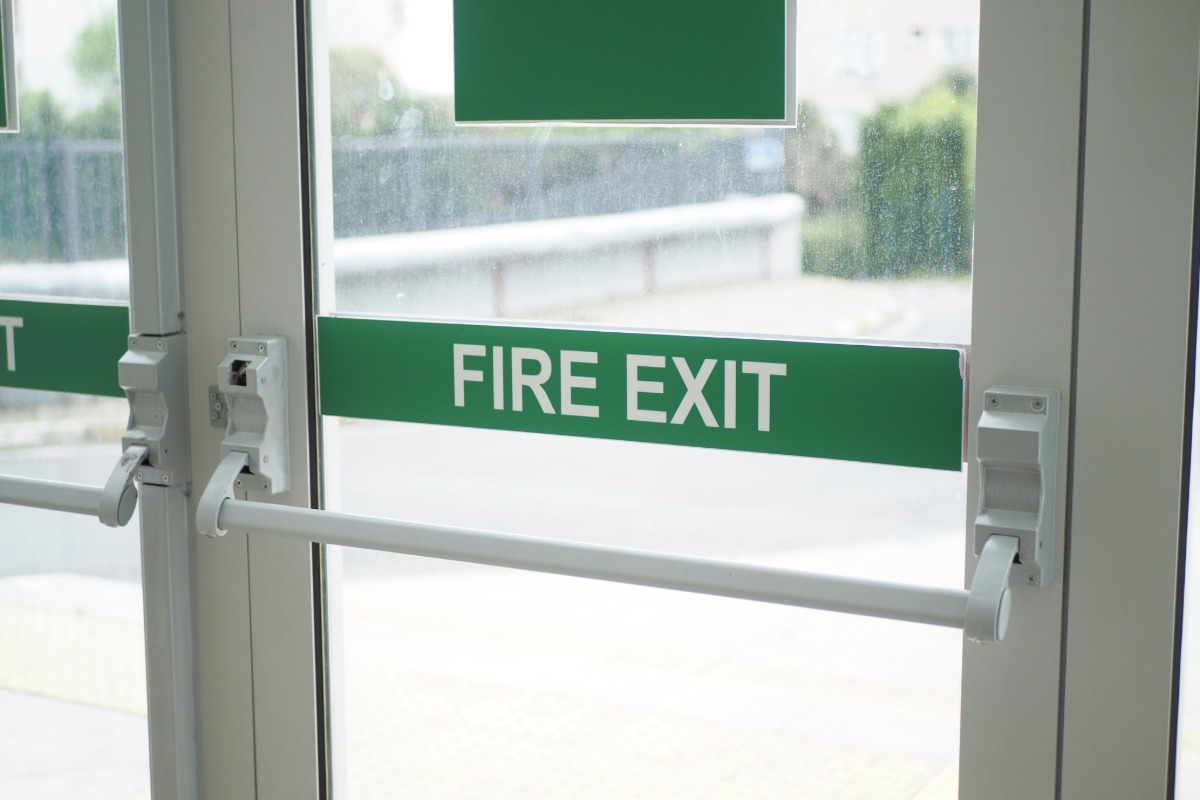
For doors on escape routes, the locking hardware itself needs to allow single-action exit. This means the exit function is built into the lock - pulling a handle or pushing a bar is all that is required to open the door from the inside. Entry can still be controlled electronically, for example by presenting a fob or credential to a reader on the entry side.
Common compliant options include:
- Escape door systems with handle egress (in line with BS EN 179)
- Panic escape door systems with push bar egress (in line with BS EN 1125)
Maglocks can still be used in certain circumstances - for example on doors that are not part of an escape route, or where a BS EN 13637 compliant system is in place for controlled or delayed egress. The right solution depends on the door, its classification, and the building's overall escape strategy.
Who is responsible?
Responsibility for escape door compliance sits with whoever has day-to-day control of the premises - typically the building owner, site manager, or facilities lead. If an access control system is installed or updated without the correct hardware on escape routes, that person may be held accountable in the event of an incident.
Using an NSI approved installer means any system designed and installed by Tremorfa will be specified to meet the new BS EN 179, 1125 & 13637 requirements. If non-compliant hardware is in place, we cannot issue an NSI Certificate of Compliance.
What should you do next?
If you have access control on escape doors - or are planning to install it - it is worth reviewing whether your current setup meets the requirements of BS EN 179, 1125 & 13637. Some sites will need hardware changes. Others may already be compliant, or close to it.
Tremorfa can carry out a site assessment, advise on what is and isn't compliant, and design a solution suited to your building. Get in touch to arrange a visit or discuss your requirements.
Get in touch to discuss your requirements
As the owner or manager of a building with access control on escape routes, ensuring your system meets the current requirements of NCP 109 Issue 4 is your responsibility.
To arrange a site assessment or discuss your access control setup, please get in touch.